1
Mesh mats
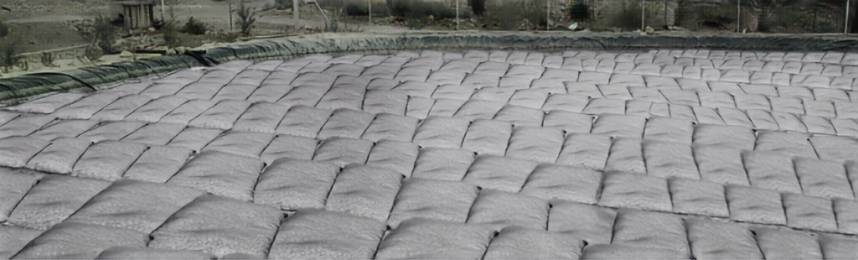
Thousands of WaterPearls are inserted in 45 cm × 100 cm mesh mats, in options of 2 to 4 layers.

Reservoir evaporative loss is equivalent to 20% of the global annual consumption of water.
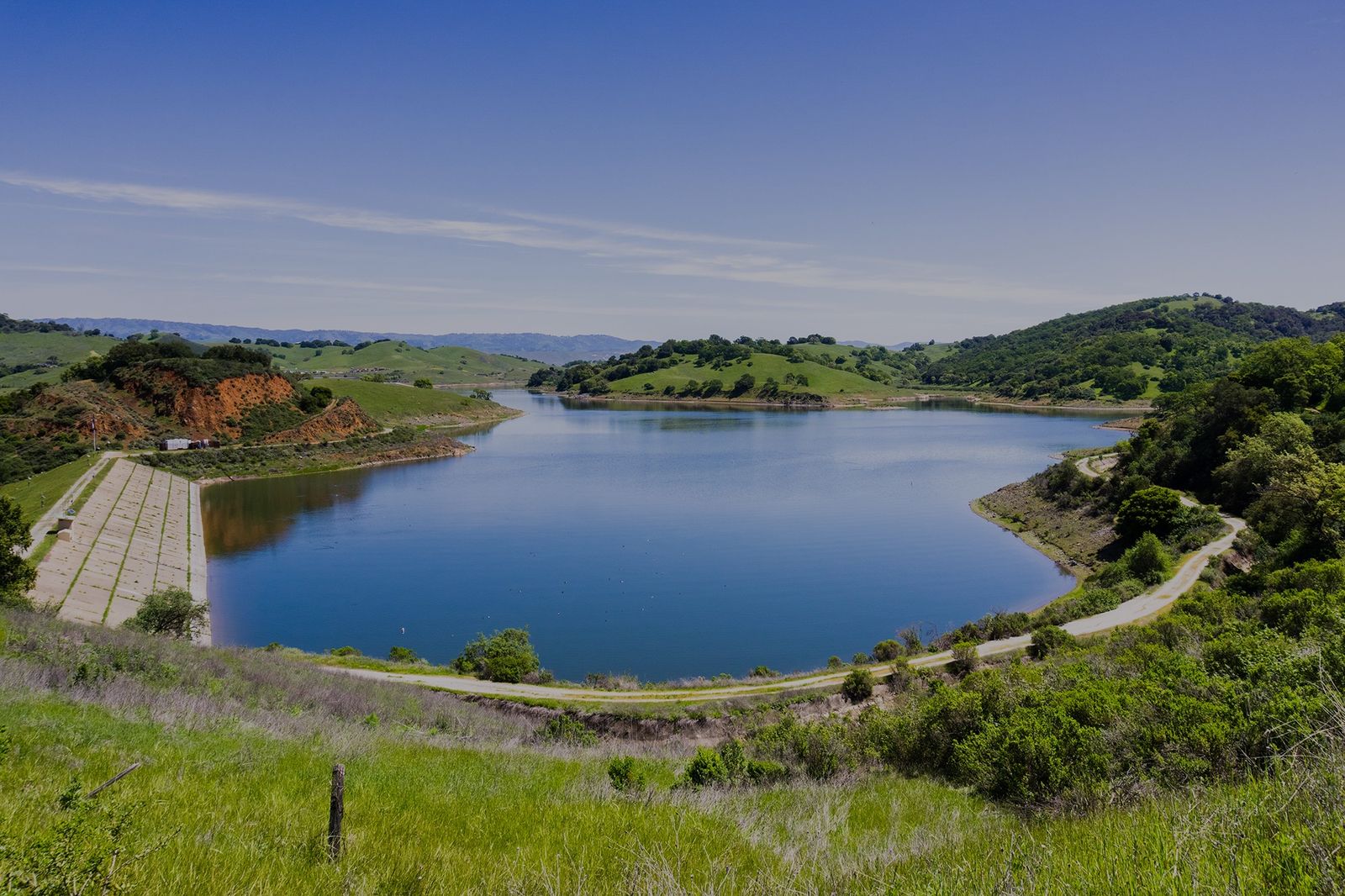
Floating WaterPearls mats form a complete evaporation cover over the reservoir.
Up to 77–98% less open-water basin evaporation
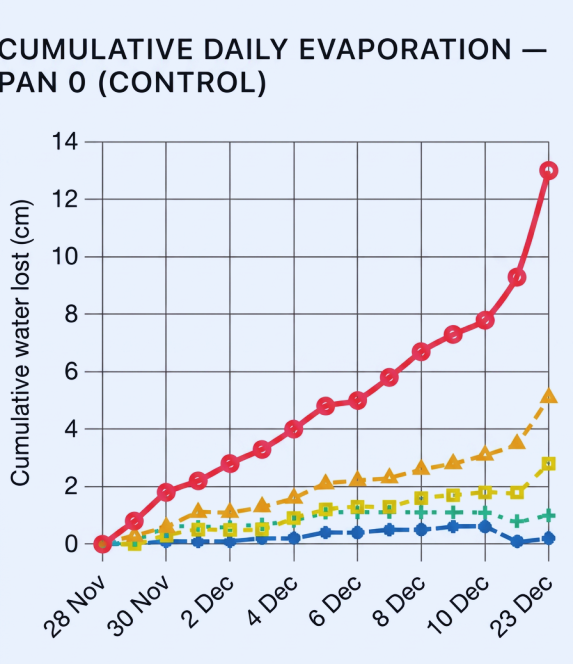
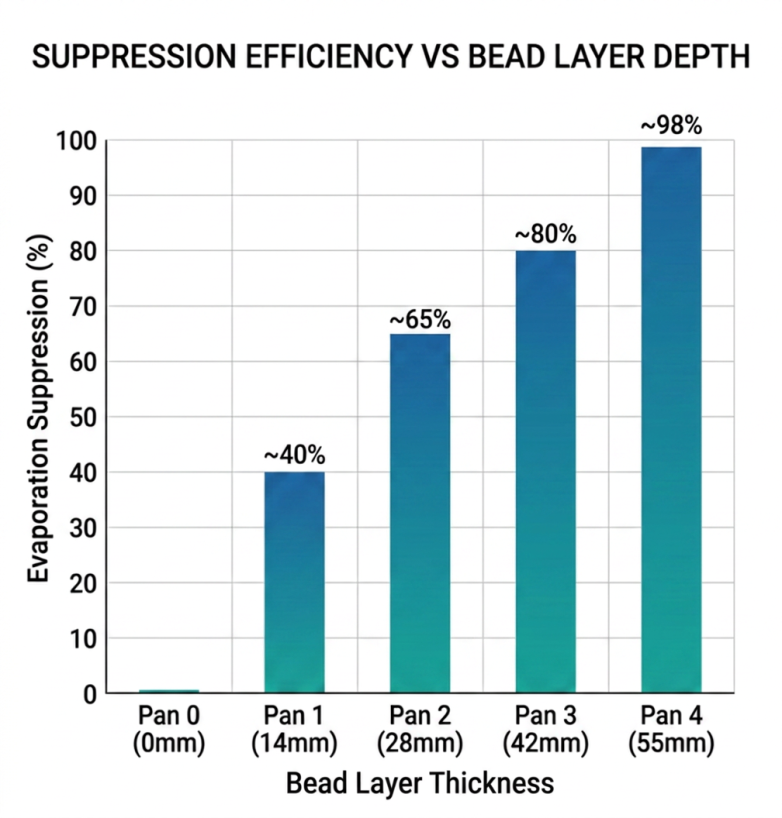
A side-by-side pan-evaporation trial near Johannesburg, South Africa (28 Nov – 23 Dec 2015 · 25 days · one 8 mm rain event). An uncovered control pan lost 91% of its water to evaporation; a pan under four layers of WaterPearls lost just 2%.
Cumulative-evaporation and suppression-vs-bead-depth measurements, RHST field trial, Johannesburg S.A., 2015. Suppression scales with layer depth — from ~40% at 14 mm to ~98% at 55 mm.
Thousands of WaterPearls are inserted in 45 cm × 100 cm mesh mats, in options of 2 to 4 layers.
WaterPearls mats are installed on the reservoir, forming a complete cover.
Just like a lotus leaf, the WaterPearls repel water.
Most evaporation covers trade one problem for another — short life, chemical residue, or limited coverage. WaterPearls are engineered to avoid all three.
Shade balls
HDPE spheres carry a high production water footprint and are typically replaced about every decade. WaterPearls last up to 50 years with a far lower production footprint.
Chemical films
Mono-layer surfactant films are wind-sensitive and degrade within days, needing constant re-dosing. A WaterPearls cover stays in place and is permeable to rain and air.
Biological covers
Floating plants cut evaporation only modestly and can deplete oxygen in the water. WaterPearls suppress 77–98% of evaporation while limiting algae and bromate formation.